Posts

Why is Metal based Powder Bed Fusion so Complex???

The world of Additive Manufacturing is very complex. The fortune to work in the sub field of powder based metal additive manufacturing has exposed me to a multi dimensional world of process parameters, material properties, calibration of the printer, build plan and post processing. Each of the above mentioned broad categories have a fractal of parameters that makes it difficult to mathematically model a simple metal powder based additive manufacturing problem. Honestly, after a certain point of designing experiments, it becomes a brain draining process to try to understand the physical aspects that govern the process or what weights do each of the many parameters carry on the final printed sample. Parameters like hatch spacing, laser power, laser speed, type of support structures, thermal conductivity of the powder, hatch angle change with every layer, scanning pattern, build orientation, downskin thickness, laser jump speed, oxygen content in the raw material, offset to contour, numbe...

Future of Construction

Image
Concrete is one of the most essential ingredients in the construction of one's dream house. It helps in maintaining the s and strength to make the structure more durable. However with the invention of 3D Printing, it is now possible to extrude large amounts of cement through an appropriately sized nozzle layer by layer. Composition of concrete can be varied in accordance with the bond strength between layers and exttudability of concrete. The nozzle should be designed such that the pumped concrete extrudes with the proper shape depending on the nozzle ending. C3DP can be achieved by various means such as extrusion screw or plunger arrangement depending on the setup of the assembly. The following images show the setup of a 4 inch stainless steel screw on the gantry of a 3D Printer. A nozzle was not used during extrusion. Note that the cracks the extruded material indicate the lack of compression of concrete within the barrel. It also indicates that the material requires certain c...

Can 3D Printing take over the World?

3D Printing is now one of he most discussed subjects in the modern world with its field offering us untapped potential for the future manufacturing and construction applications. Its almost as if everyday you hear a new story regarding any advancement in this field. Its applications are so diverse that you can find its use in almost any major industry. Automobile?, Sanitary?, Construction? You name it. Hell you can find its use in the medical industry as well. Within a decade or probably lesser than a decade, you will notice that the  3D printed ABS/PLA/PC models of human organs have replaced the aged and tattered PVC models. It is only a matter of time after which 3d printing will be the most discussed and developed fields among the younger generation due to the immense opportunities it will provide. Please do share your views and any ideas if any related to 3d printing. 

Never Heard of 3D Printing???

Image
You might probably know the approach to how an object is manufactured by Subtractive manufacturing/ CNC Machining i.e by the process of removal of material in a particular method to obtain the desired shape and size by different cutting processes using a variety of tools. These refer to the conventional cutting and milling techniques performed on CNC Machine or if you are a Luddite probably a lathe machine. On the other hand we have quite a new form of technology for the manufacture of products which is economical and efficient called 3D Printing/ Additive Manufacturing. On comparison, in 3D Printing, objects are manufactured by the addition of several layers of the material/ fused filament of very finite thickness, hence the name additive manufacturing. In three words I think 3D PRINTING IS MAGIC . Is is the art of making any object or a design we see on a screen. 3D Printing became quite some buzz in the mid 2000s although it gained attention in 2006 due to its growing dema...

Self Energizing Brakes

Image
The usual drum brakes in our car are provided with a remarkable feature called 'servo' or 'self energizing' feature. It is this feature that is responsible for the smooth and flat application of brakes in automobiles. When the vehicle is moving left, in the forward direction, then the drum will rotate in the anticlockwise direction. When the brake pedal is suddenly pressed, the two brake shoes at the drum will have full contact with the drum. However, one of the brake shoes, the primary brake shoe tends to slip for a certain distance in the drum's direction. Due to this, the primary brake shoe will tend to apply a rearwards force on the secondary brake shoe at the bottom. The wheel cylinder at the top forces the piston against the top of both the brake shoes. Due to this, the secondary brake shoe experiences force on both the sides i.e the top and bottom side.  This ensures that the brakes are applied uniformly and much less effort is applied.

Front Wheel and Rear Wheel Drive

Image
Before buying a car, many thoughts enter your head such as safety features, engine, transmission system, warranties, comfort, reversing sensors and cameras and most importantly the cost. In addition to this, you should also look into the drive wheel i.e whether you want a Front Wheel Drive (FWD) or a Rear Wheel Drive (RWD). The choice you make depends on your driving skills, terrain, weather and the tires used. In a FWD, the power produced by the engine is transferred to the front wheels of the vehicle whereas in a RWD, the power from the engine is transferred to the rear wheels via a drive shaft.  Transverse engines are employed in FWD where the crankshaft axis is perpendicular to the axis of the vehicle. In RWD, longitudinal engines are used where the crankshaft axis is along the length of the vehicle which increases it's weight. Majority of the cars use FWD these days while RWD is used in sports cars. Each wheel drive has it's advantages and disadvanta...

All about Brayton

Image
The thermodynamics behind the functioning of the gas turbines is the Brayton cycle. This cycle consists of four processes which may be closed or open. In a closed cycle, the working fluid is circulated within the system after a complete cycle as in the case of steam turbines. In open cycle, the working fluid enters at the inlet and leaves at the exhaust of the cycle as observed in the cast of turbojets and turbofans. The cycle consists of 2 isobaric (constant pressure) and isentropic (constant entropy) processes. The following processes occur in the gas turbine:    1. Isentropic compression (1-2)    2. Isobaric addition of heat (2-3)    3. Isentropic expansion (3-4)    4. Isobaric removal of heat (4-1) Brayton cycle for P-V and T-s diagrams However, compression and expansion processes do not occur in isentropic manner, increasing the compression ratios is the most effective way to increase the output of Brayton cycle. This fig...

3 spool vs 2 spool

Image
In the Trent 1000, there is 3 spool arrangement of compressors and turbines. This means that there are three sets of compressors and turbines which are connected by three separate shafts. They are the low pressure compressor (LPC) which is the fan and turbine (LPT), Intermediate pressure compressor (IPC) and turbine (IPT) and high pressure compressor (HPC) and turbine (HPT). This is on contrast to the two spool arrangement currently used in many aircrafts where a LPC/LPT and HPC/HPT are used only. All the three shafts are located within each other. The fan positioned at the front of the engine is run by the LPT via a gearbox so that it can operate at optimum speeds. Since the large diameter fan requires a large torque to start rotating, it limits the high speed attained by the LPT due to which its efficiency decreases. Additions of an additional set of compressor and turbine eliminates the influence of this problem but does not eliminate the problem itself! The problem is elim...

Introduction to Trent 1000

Image
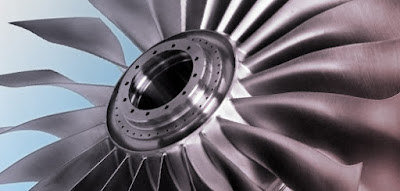
Rolls Royce are one of the leading manufacturers of turbofan engines apart from Pratt & Whitney, General Electric, CFM International and many more. One of their major milestones is the Trent 1000 which is designed and optimised to power the Boeing 787. It is the fifth member of the successful Trent family.   Let's understand certain facts about this turbofan engine before we dig deep into it's systems. It is a three shaft high bypass ratio axial flow British turbofan engine. Occupying a length of 473 cm and diameter of 285 cm, it is one of the most efficient engines discovered by man. It's fan consists of 20 blades made from Titanium alloys with small traces of Vanadium, Iron and Aluminium and is considered one of the lightest in the industry. Presence of chevrons at the rear of the engine helps reduce noise produced due to the temperature differences.      Below are some facts of it that will definitely blow your mind: During take off, tw...

Understanding working of Gas turbine in aircraft

Image

Materials used in Turbine blades

Image
There has been a wide range of materials used for the manufacturing of gas turbine blades. It is one of the most important parts in a gas turbine and any deterioration of it will affect the performance and efficiency of the turbine and most importantly will damage the turbine.  Many materials have been tested and used but the most preferred materials include steel, titanium, Nickel based super alloys and ceramics. The first stage of the compressor is very delicate as it is subjected to a very high temperature of approx. 1400-1500 degree celsius.  This part of the turbine should tolerate high temperatures, high pressures, high thermal stresses including creep and fatigue, vibrations which can influence it's performance. The first stage uses Udimet 500, Nickel based super alloy Inconel 738 or GTD 111.  The relatively cold stages of the turbine employ titanium as there are chances of it igniting when used above 500 degree celsius.      ...

Mechanical drive applications of Gas turbines

Image
The scope of gas turbines is not limited to aerodynamic uses but can also be extended for industrial purposes as well. These industrial gas turbines are designed such that they can be operated in varying climatic conditions ranging from the arctic cold to desert heat. SGT-A30RB Aeroderivative  The first class of industrial gas turbines are the aeroderivative turbines. As the name suggests, these are aircraft derived gas turbines. They include the same components as that of aircraft turbines with minor modifications so that they can include a wide range of liquid and gas fuels. They operate at an efficiency of 45% which indicates an increase of 15% compared to heavy duty gas turbines. They are light weight and utilize advanced materials for improved efficiency. They are multi shaft so that the mechanical components can operate at their optimal speed. SGT700 Industrial  The second class are the heavy duty gas turbines or frame turbines. They are heavy weight and ar...

Airborne applications of Gas turbines

Image
After having understood the importance of gas turbines, they are used  for a wide range of airborne, land and marine applications. The airborne applications of gas turbines include the widely known turbojets, turbofans and turbo propellers. . The gas turbines used for land and marine applications are called mechanical drives. Before we begin to understand where they are used let's have a basic idea of them. All the three applications have the same structure as that of the gas turbine but differ only on the areas where they are used and addition of a single component. In a turbojet, the gases which are expanding through the nozzle after combustion is directly converted to thrust which is responsible for the motion of the aircraft.  In case of turbofans, the gases expand through the nozzle and a certain portion of it is converted to thrust while the remaining portion is used for the fan to accelerate the flow of air rearwards. Turbofan Turbofans produce less noise a...

Starting system in Gas turbine

Image
In addition to the components of the gas turbine, there are accessory systems such as the starting system, ignition system, lubrication system and cooling system for proper functioning and maintenance of the system.  In order to start the assembly, a starter is used which can be a diesel engine or a generator that is directly coupled to the shaft of the compressor/turbine assembly.  The functions of the starter are three fold. The starter is to rotate the generator so that it reaches a self sustaining speed and to drive the compressor to purge the inlet and exhaust ducts for the escape of any volatile gases before the ignition occurs.  The starter is also used to rotate the gas generator after shutdown to facilitate cooling. For these purposes two starters are used.  One of them is a high speed starter which is used for rotating the generator and the other is used for purging and cooling purposes which is of low speed.  The gas generator can...

Pressure Conversion in a Gas turbine

Image
Pressure conversion plays a very important role in gas turbine. Pressure gets converted from one form to another as the fluid flows through various sections of the turbine. There are two different kinds of pressure developed within. They are 1.) Static pressure                                                            2.) Impact pressure  Static pressure is the pressure that the fluid exerts on the walls of the turbine when it is stationary. Example is the pressure stored in a football or the pressure exerted by water molecules on the walls of a container. Pressure exerted by stationary fluid on the container  Impact pressure on the other hand is the pressure exerted by a moving fluid on the walls of the turbine. The pressure felt when a moving object strikes you is an example. Total pressure is the sum of static and i...

Introduction to gas turbine

Image
Gas turbine is one of the most advanced technology ever developed. The scope of it just keeps increasing everyday with no limit to it's growth. Developed by a common interest of ideas in the late eighteenth century by many researchers, it developed vastly to become one of the most important technology used today. When the name gas turbine pops up, it's uses are not limited aerodynamically as everyone would think. It is also used for ground and marine purposes which are called mechanical drive gas turbines.  The turbines  used for airborne purposes are called turbojets, turboprops, turbofans. A typical gas turbine consists of mainly four components. They are the inlet section, compressor, combustion chamber/ combustor and the turbine.  As the name suggests, the inlet section is where the air enters the turbine. This air must be devoid of any impurities which can deteriorate the life of the the turbine such as condensed air, sand or water. The compressor...

Manufacturing of Tires

Image
Today I'll give you short intro of how the tires are manufactured. We have seen different brands such as Michelin, Dunlop, Bridgestone, Continental and may more.  The manufacturing of a tire is very complex just like a smartphone. The main ingredients used are natural rubber, synthetic rubber, silica, carbon black and many chemical substances. 1.  First, all these ingredients are mixed in a giant blender to get a black compound which is the basis of the tire material.  2. Next they are then cut into individual strips for every tire manufactured. Here all the other elements required for a tire such as beads, belt, shoulder are all prepared.  3. The next stage is the assembly of all these components in an individual tire. The tire which is developed in this stage is called green tire.  4. This green tire is then sent for vulcanization where many synthetic components are added to increase the durability of the tire. The pattern is also created o...

Origin of the safety features

Image

Safety Advancements

Image
These days, the car tech has improved significantly. The development has been so amazing with the features ranging from semi autonomous to completely autonomous systems. Along with the tech, so have the safety features have vastly improved. 1. Automatic Cruise Control: This feature detect the safe cruising speed and maintain in that speed to remain at a safe distance. It obtains it's input from the laser and radar systems. It will receive the speed of similar tech equipped cars. 2. Lane Departure Warning: This feature basically detects the phosphorus from the strips on the road and gives you a gentle warning that you are drifting from the lane. The camera on the windshield detects it and might even control it. 3. Adaptive Headlights:This feature helps ensure safer driving at night at hills or curves. In normal cars, when taking a turn the headlights will point in the forward direction. But in this tech, the headlights illuminate the path you are driving by various s...

Types of Hybrids

Image
Over the many years, cars have developed tremendously. The first car with internal combustion engine was developed by Francois Issac de Rivaz in 1807. It was then followed by Karl Benz in 1886 who came up with cars that had 4 stroke engine and produced own power. It was the many reasons why he was given a patent. Since then automobiles have developed rapidly and today we have eco-friendly hybrid and electric cars. Logo of Benz in 1909 Now the hybrids come in different designs. First, there are parallel hybrids. In them both the engine and the motor supply power to the wheels.  In series hybrids only the motor provides power to the wheels while the engine powers the motor. In a way, it acts like a generator. In full hybrids the motors and the batteries present are powerful enough on their own and not require the support of the engine. Mild hybrids are the exact opposite of full hybrids. They have very weak motors and requires the assistance of the engine. In ordinary hy...